
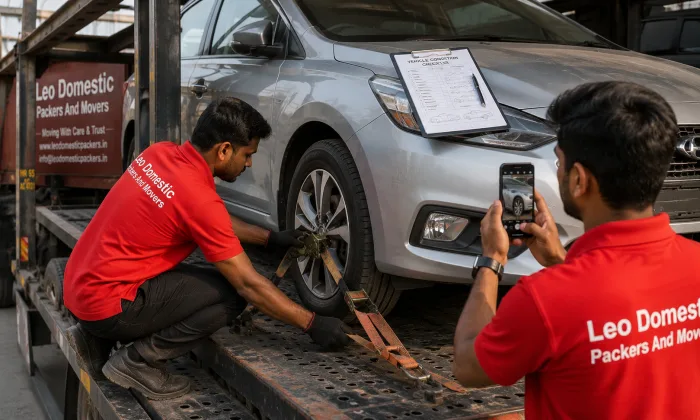
Transporting a vehicle during relocation requires special care. Follow these tips to keep your car or bike safe in transit.
Choose a Specialized Carrier
Vehicles should always be transported using specialized car or bike carriers designed to secure them safely and prevent movement during transit. Attempting to move a vehicle in a general cargo truck alongside household goods significantly increases the risk of scratches, dents, or more serious damage from shifting cargo.
Specialized carriers use wheel straps, wheel chocks, and multi-point securing systems specifically engineered for vehicles, which general-purpose moving trucks simply do not have. If your moving company offers a dedicated vehicle transport service, this is almost always a safer choice than trying to combine vehicle and household goods transport.
Document Existing Condition
Take clear photos of your vehicle from multiple angles before transport begins, documenting any existing scratches, dents, or wear. This is useful in the rare case of a damage claim, giving you and the moving company a clear reference point for the vehicle's condition before transit.
Be thorough — photograph the exterior from all four sides, close-ups of the wheels and tires, the interior dashboard and seats, and the odometer reading. Time-stamped photos on your phone are usually sufficient, but consider sharing copies with the transport company as well so there is a shared record.
Planning a move soon?
Get a free, transparent quote from Leo Domestic Packers And Movers.
Remove Personal Belongings
Remove all personal items from your vehicle before transport, as most moving companies do not cover loose personal items during vehicle transit, and some carriers have policies against transporting vehicles with items left inside for safety and liability reasons.
This includes obvious items like bags and electronics, but also less obvious things like toll tags, parking permits, and documents left in the glove compartment. A quick walkthrough of the entire vehicle, including trunk and under-seat areas, ensures nothing is accidentally left behind.
Prepare the Vehicle Mechanically
Before handing your vehicle over for transport, ensure the fuel tank is only partially full — most carriers recommend around a quarter tank, which reduces weight and fire risk without leaving the vehicle unable to be moved short distances during loading and unloading.
Check the battery, tire pressure, and ensure there are no fluid leaks before transport, as leaking fluids can cause complications during loading and may result in additional cleaning charges. If you know the vehicle has an active mechanical issue, inform the transport company in advance so they can plan accordingly.
Check for Insurance Coverage
Confirm whether transit insurance is included in your vehicle transport service or available as an optional add-on, giving you added financial protection and peace of mind during the journey. Do not assume standard vehicle insurance automatically covers transport-related incidents — check with your insurer directly if you are unsure.
For higher-value vehicles or longer interstate transport routes, transit insurance is a worthwhile investment given the extended time and distance the vehicle will be in transit, often through varying road and weather conditions outside anyone's direct control.
Track Your Shipment
Choose a moving partner that offers real-time tracking so you always know where your vehicle is during the transport process, rather than simply waiting for a delivery call with no visibility in between. This is particularly reassuring for longer interstate transport routes that may take several days.
Regular status updates also allow you to plan your own arrival at the destination city more accurately, avoiding situations where you arrive well before your vehicle or have to wait around unexpectedly for a delayed delivery.
Inspect on Arrival
When your vehicle arrives at its destination, conduct a thorough inspection before signing any delivery confirmation, comparing the current condition against your pre-transport photographs. Check all the same points you photographed initially — exterior panels, wheels, interior, and mechanical function.
If you notice any new damage, document it immediately with photos and raise it with the transport company before completing the delivery process, since claims are significantly harder to process once you have already accepted the vehicle without noting any concerns.